Middle Class Hero Urdu Novels – Ordinary Love
Middle Class Hero Urdu Novels – Ordinary Love
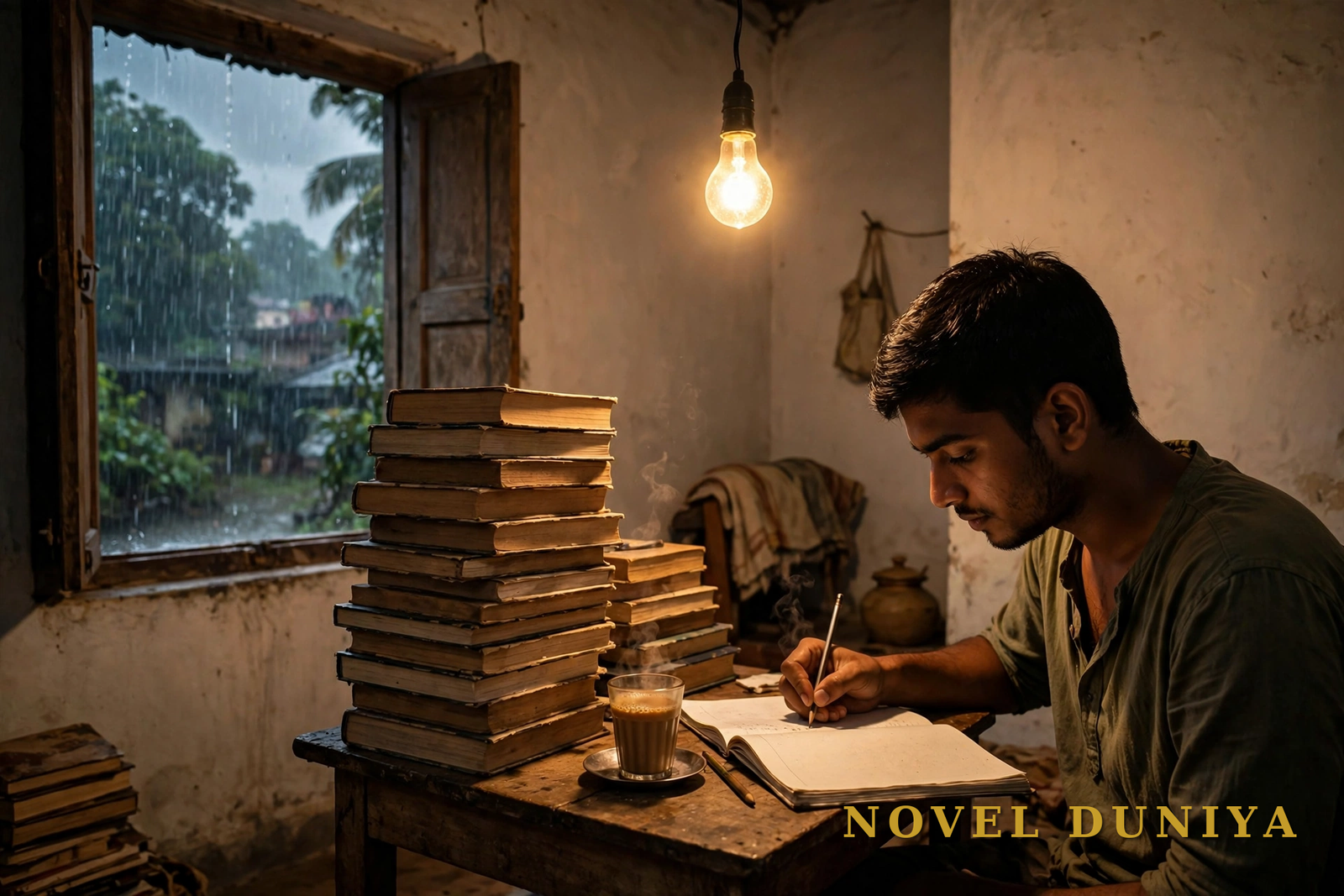
Middle class hero Urdu novels are love stories where the hero himself is ordinary — a teacher, a shopkeeper’s son, a young clerk, a man who works with his hands — instead of the billionaire, wadera, or CEO who dominates Urdu fiction. This is the working man’s romance: no empire, no haveli, no sudden inheritance to rescue him. But before we go further, an honest warning nobody else gives: almost every search result that says “middle class” is about the heroine, not the hero. This guide separates the trap from the trope, maps the rare middle-class hero shelf, and names the one classic that defines it — without inventing a single title.
Quick summary:
– The trope: the HERO is middle class — ordinary work, ordinary home, dignity as his only capital
– Search warning: nearly all “middle class” listings are about the heroine (rich hero + middle-class girl) — know which shelf you are on
– Verified anchor: Parizad by Hashim Nadeem — the poor boy who works as mason and teacher, rejected, then rises
– Why he is rare: the rich hero is the genre’s default fantasy (see our rich hero guide)
– Core fantasy: love that survives without money — and a man worth loving because of his struggle
The Heroine Trap: Read This First
This is the single most important section on this page, because the search results will waste your time if you do not know it.
Nearly every Urdu novel listing tagged “middle class” is filed under middle-class heroine — the rich hero + middle-class girl pairing: Mohabbat Roshni He by Nadia Ahmad (“Caring Rich Hero, Middle Class Heroin”), Hala and Khwab e Junoon by Umme Hania (“Rich Hero, Middle Class Heroine”), the whole YouTube cluster of “rich hero falls for middle-class heroine” audio novels. These are not middle-class hero stories. They are rich-hero stories where she is middle class.
The true middle-class hero — a man from an ordinary family who stays ordinary through the story — is genuinely rare. If you typed “middle class hero” hoping for rich-hero drama with a humble girl, you want the rich hero guide instead. If you want the man who earns his love with labor, not wealth — keep reading.
What Defines Middle Class Hero Urdu Novels
A middle-class hero novel is defined by one reversal of the genre’s default: the money is gone. The hero cannot buy the problem away. He cannot threaten a rival with his empire, bribe a system, or fly the heroine to a new life. His tools are patience, skill, stubborn dignity, and time — which is exactly why his love stories feel heavier than the average billionaire romance.
The core engine is the struggle arc. Where the rich hero’s arc is about softening (the tyrant learns tenderness), the middle-class hero’s arc is about rising: the world underestimates him, the heroine’s family rejects him, the rival has money he does not — and the story’s question is whether dignity plus labor can beat wealth. When he wins, the victory lands harder because nothing was handed to him.
There is also a quiet realism these stories carry. The middle-class home — the joint family, the mother’s prayers, the tuition money counted twice, the elder sister’s marriage as the family’s real deadline — is the Pakistan most readers actually live in. The middle-class hero is the genre’s mirror held up to its audience, which is both why he is beloved and why writers avoid him: he is harder to write without being boring.
The Parizad Anchor: The Defining Middle-Class Hero
One novel owns this trope so completely that every guide must start with it: Parizad by Hashim Nadeem.
Parizaad is the poor, dark-skinned boy from a broken home — a father with two wives and many children, none of whom love him except one sister. He works as a mason, then as a teacher; he tutors Nahid, the neighbor’s daughter, and falls for her — but she loves another boy, and his poverty makes him invisible to her. He leaves, works for a businessman, and through a twist of fate inherits wealth. Later he loves a blind podcast anchor and marries her.
Why does Parizad matter here? Because he is the genre’s purest middle-class hero arc: rejection because of poverty, labor as identity, and a rise that never erases what the struggle taught him. Most “middle class hero” content on the internet is actually Parizad content wearing other keywords. If you are browsing this shelf, read or watch Parizad first — everything else on the shelf is in conversation with it.
The Four Shapes of the Middle-Class Hero
Since no dedicated shelf exists, here is a map of where the middle-class hero actually appears:
1. The struggling earner. Teacher, clerk, mason, driver — the man whose labor is the story. Parizaad is the template. These stories are about work as romance: his dignity is his charm.
2. The middle-class family man. The rude-but-reserved hero inside a middle-class joint family setup — like the hero of Yeh Lamhay Tumhare Naam by Sawaira Shakeel, a cheeky heroine and rude reserved hero in a middle-class household. The middle-class-ness here is atmosphere, not plot: the family, the house, the budgets.
3. The rise-through-work hero. The man who starts ordinary and climbs — Parizad’s businessman-employer arc belongs here. The fantasy is mobility: he does not marry into wealth, he earns into it.
4. The contrast hero. The middle-class man placed beside a rich rival or a rich heroine — his ordinariness is the point. These stories borrow the class-conflict engine: love that has to cross the money line from below.
Middle Class Hero Urdu Novels vs Middle Class Heroine Novels: The 2-Way Map
Middle-class hero: he is ordinary. The story’s engine is his struggle, his dignity, his rise. Rare. Anchored by Parizad. Search results almost never mean this.
Middle-class heroine: she is ordinary, he is rich. The story’s engine is his wealth meeting her simplicity — the classic rich-hero romance. Extremely common. Anchored by Hala, Khwab e Junoon, Mohabbat Roshni He, and the entire “rich hero + middle-class girl” YouTube cluster.
When you search, check the description: if the hero is described as rich, caring, possessive, or a businessman — you are on the heroine shelf. If he is described as a teacher, a laborer, a struggling young man — you found the hero shelf.
Why the Middle-Class Hero Is Rare
The honest answer is economic, not literary: Urdu romance’s default fantasy is the rich hero — the provider, the protector with resources, the man who can fix anything. That fantasy sells because it is escape. The middle-class hero is the opposite of escape; he is recognition. Readers browse romance to leave their own budgets behind, not to meet them on the page.
This is also why the middle-class hero appears most often as the second hero — the good man the heroine should have chosen, the contrast to the rich rival. He is the genre’s conscience more often than its lead. When he does lead, as in Parizad, the story has to be exceptional to carry him — which is why one great middle-class hero novel outshines a hundred mediocre rich-hero ones.
Hunting Guide: How to Find These Novels
Since no website maintains a real “middle class hero” shelf, hunt with these keywords instead: “poor hero,” “class difference,” “class conflict,” “middle class heroine” (then check whether he is ordinary too), and — most reliably — Parizad-adjacent searches. The novelistan tags for “class difference based” and “class conflict” are hunting grounds, not shelves: they list titles like Qismat Ka Khel (Mariyam Khan) and Hala (Umme Hania) where you must read the description to see who is actually middle class. Trust the description, not the tag — the same “trust the description, not the label” rule we teach on the stubborn hero page.