
Cousin Hero Heroine Urdu Novels – Cousin Jodi
Cousin Hero Heroine Urdu Novels – Cousin Jodi
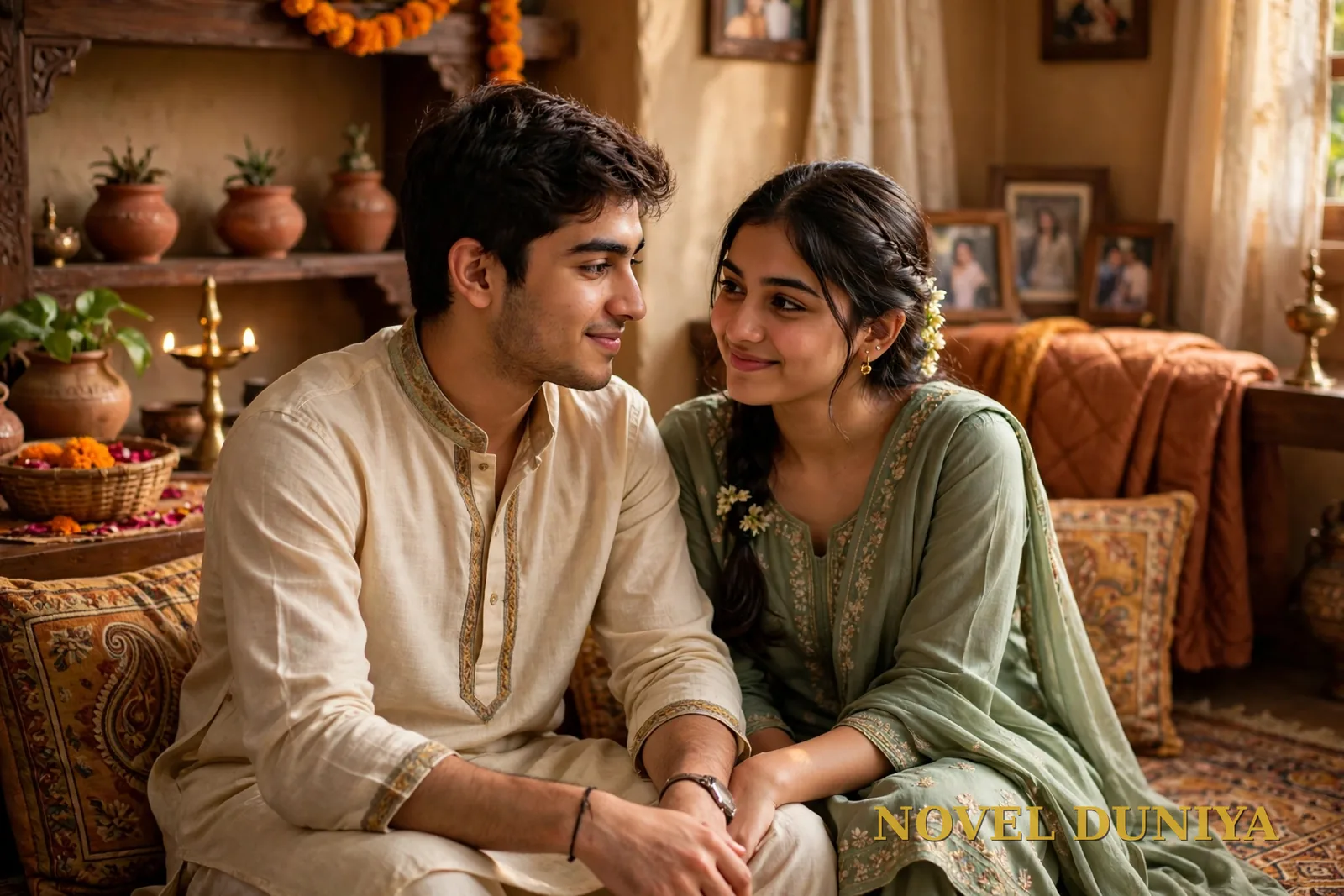
Cousin hero heroine Urdu novels are love stories where the hero and the heroine are cousins with each other — the taya-zad bhai and the chachazaad behan, the mamu-zad boy and the khala ki beti, who grew up in the same joint family and fell in love inside it. Not just him, not just her, but the pair: two cousins, one family, one love story that the whole khandan gets to watch unfold.
The phrase stacks “hero heroine” after “cousin” because the searcher wants both of them at once — the couple. No major site serves this exact shelf. The cousin-hero page tells his side, the cousin-heroine page tells hers, and the cousin-marriage page is about the wedding plot. This guide is about the two of them together: the cousin couple at the heart of Urdu fiction’s most beloved romance family.
What you’ll find in this guide:
– Why the cousin couple is Urdu fiction’s default romance
– The joint family as the third character
– The classic cousin-couple arc — nok-jhok to nikah
– Verified cousin hero heroine Urdu novels with writers
– The cousin wording map — taya-zad, mamu-zad, chachazaad
– Cousin hero heroine vs cousin hero vs cousin heroine vs cousin marriage
– Answers to the most asked questions
Why the Cousin Couple Is Urdu Fiction’s Default Romance
Ask why so many Urdu novels pair cousins and the answer is the joint family itself. In the world these novels are written for, cousins grow up side by side — same courtyard, same dastarkhwan, same Eid mornings. The boy she fought with over the last piece of mithai becomes, a decade later, the man she cannot stop thinking about. No introduction needed, no strangers to vet, no family to convince from scratch — the family is already there, watching.
That is the cousin couple’s quiet superpower: the romance inherits years of shared history before the first romantic scene. Readers get the slow burn of a lifetime and the payoff of a confession, all inside one family. It is familiar, it is culturally rooted, and it is why this shelf never empties.
The Joint Family as the Third Character
In cousin hero heroine Urdu novels, the family is never just background — it is the third lead. The elders who raised them both become the audience, the obstacle, and eventually the blessing. Watch how the best novels use them:

- The audience. Every glance between the cousins happens in front of someone — a chachi’s knowing smile, a dada’s raised eyebrow, a younger sibling’s teasing. The romance plays out on a family stage, which makes every small moment feel bigger.
- The obstacle. Family honor, biradari expectations, old feuds between the fathers’ sides, or a rival rishta the elders prefer — the joint family manufactures the conflict that keeps the couple apart.
- The blessing. When the family finally says yes, it is not just permission — it is the whole khandan folding the couple into its future. The happy ending feels communal, not just personal.

The Classic Cousin-Couple Arc — Nok-Jhok to Nikah
Most cousin hero heroine Urdu novels run one beloved arc with endless variations:

Childhood ease. They grow up together — playmates, partners in mischief, completely at home with each other. This is the foundation every later feeling stands on.
The shift. Adolescence or a long separation redraws the lines. The teasing gets sharper, the silences longer. One of them notices first — often her, often him, sometimes both at once.
Nok-jhok. The love-hate middle: bickering, jealousy, misunderstandings, the classic rude-cousin phase. He is indifferent or harsh; she is hurt or defiant. The family watches, amused or worried.
The crisis. A rival rishta, a family feud, a forced separation, or a misunderstanding that threatens to end everything. The couple must choose each other against the family’s wishes — or win the family’s wishes over.
The nikah. The family blesses the union, and the wedding is not just two people marrying but the khandan celebrating itself. The couple that grew up in one house now builds their own corner of it.
Verified Cousin Hero Heroine Urdu Novels
Honesty first: many sites carry AI-spun or renamed copies of cousin romances with identical summaries under different titles — we do not treat those as verified. The titles below come from established novel shelves with named writers. Writers are credited only where sources name them.
- Tere Berukhi Mere Chahat by Bia Ahmed — a classic cousin-marriage and rude-hero novel: the heroine loves her cousin, the hero, deeply — but he is indifferent and treats her rudely. The love-hate cousin arc in its purest form.
- Tum Sang Naina Lagay by Farhana Naz — a captivating love-hate cousin relationship filled with humor, romance, and family drama — the nok-jhok phase done with warmth and wit.
- Mein Mah e Kamil Hun by Ayna Baig — set in a traditional haveli: a rude hero who softens when he learns the heroine never wanted the match forced on them both — the cousin couple inside feudal walls.
- Muhbt Zindagi Hai by Rashida Riffat — a digest novel of arranged and cousin marriage with an innocent heroine and a caring hero at its center — the gentle end of the cousin-couple spectrum.
- Dhal Gae Sham e Hijar by Sadaf Rehan — the city-meets-family variant: the heroine arrives to study and stays at her aunt’s house, where her cousin, the hero, starts visiting frequently because of her — unfamiliarity turning into feeling.
- Kahi Un Kahi by Rashida Riffat — a romantic comedy with a sweet cousin love story, office setting, rude hero and chaotic heroine — proof the cousin couple works even outside the haveli.
Want his side of the story? Explore cousin hero Urdu novels for the taya-zad hero as a character — and cousin heroine Urdu novels for her side.
The Cousin Wording Map — Taya-Zad, Mamu-Zad, Chachazaad
Readers search for the cousin couple in Roman Urdu and Urdu, and each phrase carries its own shade:
- Taya-zad bhai — the paternal uncle’s son; the classic cousin hero, the boy from the father’s side of the family.
- Mamu-zad — the maternal uncle’s son; the mother’s-side cousin, often the softer or more distant variant.
- Chachazaad / chachi ki beti — the paternal uncle’s daughter; the classic cousin heroine.
- Khala ki beti — the maternal aunt’s daughter; the mother’s-side cousin heroine.
- Cousin marriage — the plot phrase; leads to wedding-centered pages rather than the couple’s character story.
Knowing these phrases matters because the best cousin hero heroine Urdu novels hide under them — shelved as “cousin marriage” or “family based” rather than under any couple tag.
Cousin Hero Heroine vs Cousin Hero vs Cousin Heroine vs Cousin Marriage
Readers mix these four constantly, so here is the map:
- Cousin hero heroine novels (this page) are about the couple — he and she, cousins with each other, their shared arc from childhood ease to love.
- Cousin hero novels are about him — the cousin hero as a character: the taya-zad leading man, his pride, his transformation.
- Cousin heroine novels are about her — the cousin girl at the story’s heart: her feelings, her trials, her choice.
- Cousin marriage novels are about the plot — the wedding, the arrangement, the marriage itself as the story’s engine.
A novel can be all four at once, but the search terms serve different hungers. If you typed “hero heroine,” you wanted the pair — so this page keeps the camera on both of them.
Frequently Asked Questions
What are cousin hero heroine Urdu novels?
Cousin hero heroine Urdu novels are romance stories where the hero and heroine are cousins with each other — the taya-zad boy and chachazaad girl (or mamu-zad/khala-ki-beti variants) who grew up in the same joint family and fall in love inside it.
What is the difference between cousin hero heroine and cousin marriage novels?
Cousin marriage novels are about the wedding plot — the arrangement and the marriage itself. Cousin hero heroine novels are about the couple — their shared arc from childhood ease through nok-jhok to love, whether or not a wedding drives the plot.
Why are cousin romances so popular in Urdu novels?
Because the joint family makes them natural: cousins grow up side by side, so the romance inherits years of shared history. It is culturally rooted, familiar to readers, and gives writers a ready-made world of family stakes.
What is the classic cousin-couple story arc?
Childhood ease, then a shift in adolescence, then the nok-jhok love-hate middle, then a crisis (rival rishta or family feud), and finally the family-blessed nikah.
Which is the best cousin hero heroine novel to start with?
Tere Berukhi Mere Chahat by Bia Ahmed is the classic entry — the heroine loves her rude cousin-hero deeply while he stays indifferent, the purest form of the love-hate cousin arc. For a lighter start, try Tum Sang Naina Lagay by Farhana Naz.
Do cousin hero heroine novels always end with marriage?
Almost always. The genre’s promise is the family folding the couple into its future — the communal happy ending is the whole point of the shelf.
Where can I read cousin hero heroine Urdu novels online?
Many popular titles circulate on Urdu novel sites and audio channels. Novel Duniya shares honest information and reviews about these novels; we do not host pirated PDFs, so please support writers through official sources.