
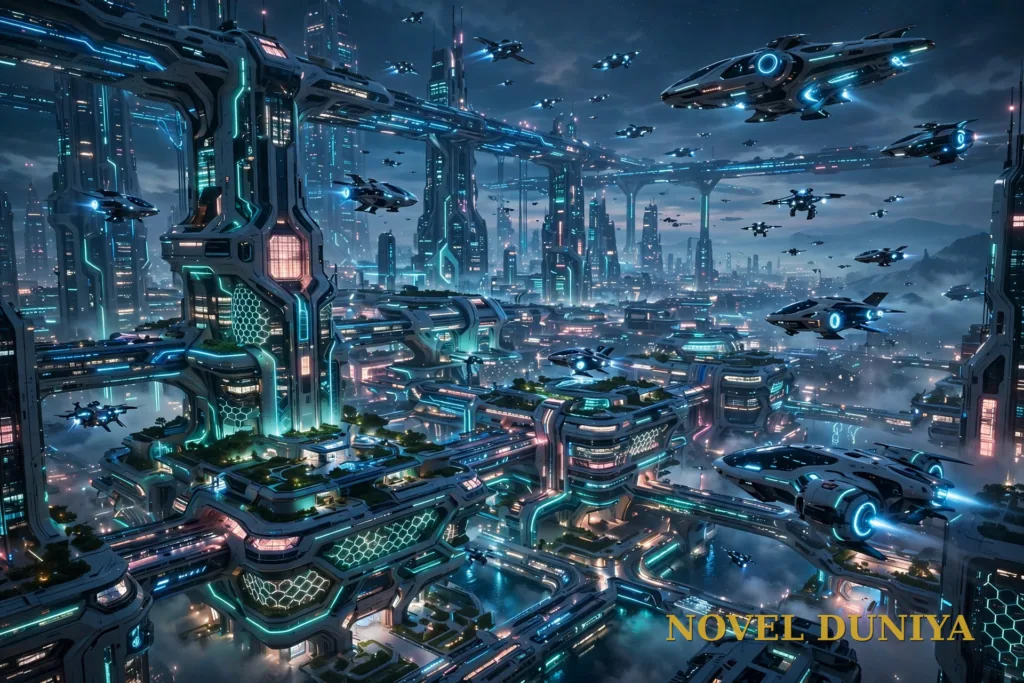
Science Fiction Urdu Novels – Future Worlds
Science fiction Urdu novels imagine tomorrow — strange inventions, futures that almost feel real, secret experiments, and worlds where technology changes what it means to be human. If a novel asks “what if science made this possible?”, you are reading science fiction.
This is one of Urdu literature’s smallest but most fascinating shelves. For generations, Urdu readers met the future mainly through translated classics and children’s digests; today, a new wave of writers is mixing science fiction with thriller, horror, and romance — and the results are quietly exciting.
What Defines Science Fiction Urdu Novels?
Science fiction runs on a simple promise: a real idea from science, pushed one step beyond what we know. A science fiction Urdu novel usually has at least one of these:

- Future settings. A tomorrow that looks different from today — new cities, new machines, new rules.
- Strange science. Inventions, experiments, or discoveries that drive the story forward.
- The “what if” question. What if this technology existed? What would it do to ordinary people?
- The plausibility test. Unlike fantasy (which runs on magic), science fiction asks you to believe this could almost happen.
That last point is what separates sci-fi from its cousins. A pari’s spell needs no explanation; a scientist’s machine does — even a thin one. When Noor Rajpoot’s DNA blends psychology, crime, and science-fiction elements, it keeps one foot in the laboratory and one in the shadows.
Science Fiction vs Fantasy — Know the Line
Urdu readers often shelve these together, but they feel very different:
- Science fiction is about possibility — futures you can almost touch, machines you can almost build.
- Fantasy is about wonder — magic, paris, and enchanted worlds that ask for no explanation.
- Horror is about fear — the unknown as a threat.
Many beloved Urdu novels live on the borders. Ishtiaq Ahmed’s Inspector Jamshed adventures sometimes fly into space or face impossible inventions — part detective story, part sci-fi daydream. Knowing which shelf a novel belongs to helps you find more of what you love.

Best Science Fiction Urdu Novels to Read
- DNA by Noor Rajpoot — a psychological thriller with science-fiction elements, exploring hidden truths and moral conflicts through a darker, layered narrative. (Ongoing.)
- Sazshi Devta by Ishtiaq Ahmed — an Inspector Jamshed adventure with speculative, larger-than-life stakes from Urdu’s most prolific novelist.
- Aesa Bhi Hota He by Syeda Afifa Akbar — a science-fiction story touching on faith, effort, and the modern world.
- Si Moon by Ishtiaq Ahmed — a space-flavoured Inspector Jamshed outing for readers who like their mysteries with stars.
- Yoda Par Hamla by Ishtiaq Ahmed — an adventure that reaches beyond Earth, pure pulp imagination.
- Udan Tashtri Ka Tajurba by Ishtiaq Ahmed — a flying-saucer themed tale from the golden age of Urdu children’s digests.
- Surkh Jazeerah — sold on Urdu sci-fi shelves as an adventure into the unknown. (Writer details unverified.)
- Uniswan Darwaza — a mystery-adventure marketed as science fiction; the title alone promises a doorway somewhere strange. (Writer details unverified.)
- Tarak — another title carried by Urdu sci-fi booksellers, aimed at young adventure readers. (Writer details unverified.)
Shahzad Bashir is also noted by literary magazines as a writer working in science fiction alongside jasoosi and adventure fiction — worth watching for readers who like their sci-fi with suspense.

Who Will Enjoy Science Fiction Urdu Novels?
- Thriller fans who want their suspense with a futuristic twist — start with DNA.
- Nostalgia readers who grew up on Inspector Jamshed — revisit the space-age adventures.
- Young readers meeting the genre for the first time — the digest-era titles are short, fast, and fun.
- Curious minds who enjoy asking “what if” — this shelf was made for you.
A gentle note: Urdu science fiction is still a young shelf, and many titles come from children’s digests or blur into adventure and fantasy. That is part of its charm — but set your expectations accordingly.
Frequently Asked Questions
Q? What are the best science fiction Urdu novels?
DNA by Noor Rajpoot is the most prominent modern example, blending sci-fi with psychological thriller. From the classic digest era, Ishtiaq Ahmed’s speculative Inspector Jamshed adventures — including space and invention-themed titles — are reader favourites.
Q? Is there science fiction in Urdu literature?
Yes, though the shelf is small. It ranges from children’s digest adventures with futuristic themes to modern speculative thrillers. Writers like Ishtiaq Ahmed and Noor Rajpoot have both worked with science-fiction elements.
Q? What is the difference between sci-fi and fantasy Urdu novels?
Science fiction builds on plausible science — inventions and futures that could almost exist. Fantasy runs on magic and wonder with no scientific explanation needed. Many Urdu novels blend the two.
Q? Are Ishtiaq Ahmed’s novels science fiction?
Mostly they are jasoosi (detective) and adventure novels, but several include science-fiction elements — space travel, strange inventions, and futuristic villains — especially in the Inspector Jamshed series.
Q? Where can I read science fiction Urdu novels online?
Novel Duniya shares honest information and reading guidance about Urdu novels. We do not host pirated PDFs — please support writers by reading through official sources.
Q? Is DNA by Noor Rajpoot complete?
DNA is listed as an ongoing novel. Check the novel’s page for the latest status before you begin.
Q? Are there Urdu sci-fi novels for children?
Yes — many classic digest-era titles, including several by Ishtiaq Ahmed, were written for young readers and remain a fun entry point into the genre.
Reading Guidance
This page covers science fiction Urdu novels, stories that imagine tomorrow through strange inventions, futures that almost feel real, and secret experiments, and it notes this is one of Urdu literature’s smallest shelves.
A good way to use a category guide like this one is to treat it as a shelf to browse, not as a single book’s page. Start with the definition of the category, then read the themes, and let those two sections narrow the list to the titles that match your mood. Browsing a shelf works best when you know what feeling you want from tonight’s reading, because the shared theme is what the titles have in common, not a shared story.
Frequently Asked Questions
How do I pick a first title from this category?
Start from the themes section on this page rather than from any single recommendation. Pick the theme that matches the mood you want tonight, and let that narrow the list for you.