
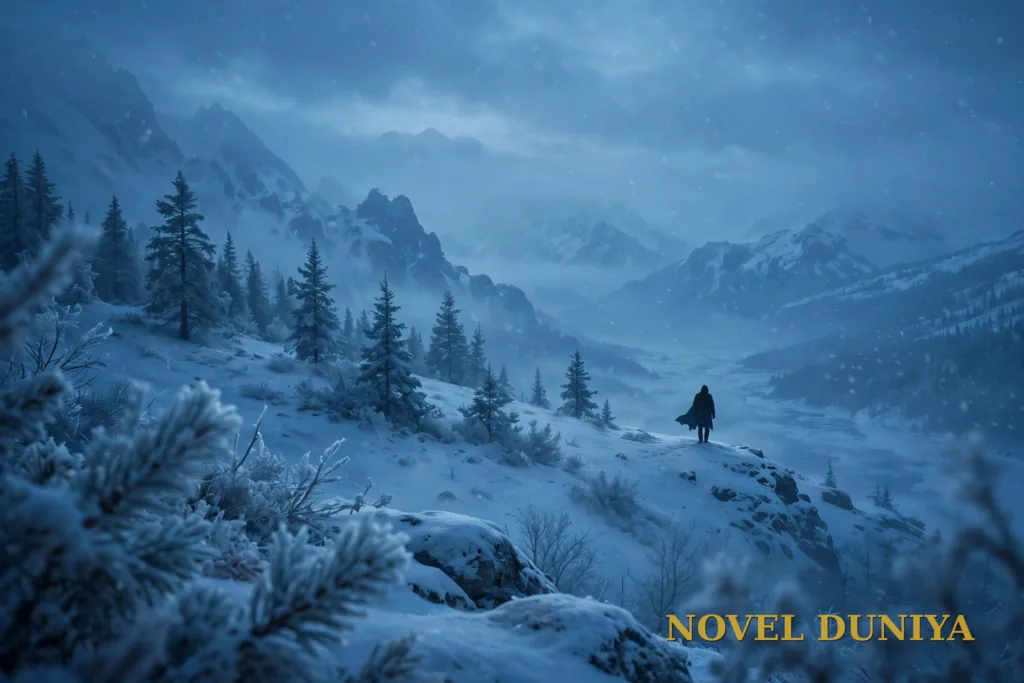
Cold Hero Urdu Novels – Distant Love Stories
Cold hero Urdu novels feature the sard hero — the emotionally distant man who has shut the world out. He is not angry like the rude hero, not proud like the arrogant hero, not claiming like the possessive hero. He is simply… absent. Behind walls. And the story is about the one person who gets through. This guide defines the trope honestly, separates it from the crueler look-alikes it keeps getting confused with, and lists the verified titles worth your time.
Quick summary:
– The trope: the hero is emotionally shut down — silent, distant, hard to reach — usually because of an old wound
– Key distinction: cold ≠ cruel ≠ rude (distance vs malice vs anger)
– The engine: the “thaw” — why watching ice melt is one of romance’s deepest satisfactions
– Verified anchors: Khamoshiyan by Sidra Sheikh, Khamosh Aey Dil by Maryam Rashid, Aitbaar by Mahreen Munir
– Honest note: the shelf is thin and mostly lives inside cruel/rude lists — this guide untangles it
What Defines Cold Hero Urdu Novels
A cold hero novel is defined by emotional absence. The hero does not rage, does not boast, does not scheme. He withdraws. He answers in monosyllables, keeps his own counsel, and treats the heroine’s warmth as an inconvenience — until it isn’t.
The cold hero’s defining scene is always the same: a moment when the mask slips. A flash of grief in the eyes. A hand that lingers a second too long. The reader — and the heroine — sees that the coldness is not emptiness. It is a full heart, locked.
Cold vs Cruel vs Rude — The Three-Way Map
This is the distinction nobody on the search results makes, and it matters more here than anywhere:
- Cold (sard): driven by withdrawal. He has shut down. He does not want to hurt anyone; he wants to be left alone. His damage is turned inward.
- Cruel (zalim): driven by malice or indifference to pain. He hurts, or does not care that he hurts. His damage is turned outward.
- Rude (bad-tameez): driven by anger. He lashes out, snaps, is harsh. His damage is loud.
The confusion is understandable — all three heroes are unpleasant at the start. But the story’s moral engine differs completely. A cruel hero must repent. A rude hero must soften. A cold hero must open. If you go in expecting cruelty and get distance, you will misjudge both the hero and the story.
arrogant-hero-urdu-novels — the sibling shelf, where the hero is proud rather than withdrawn. rude-hero-based-novels — where anger drives the hero.

Why the Cold Hero Melts Readers
1. The thaw is the slowest burn in romance. Every tiny crack in the ice — a remembered preference, an involuntary smile, a night he cannot sleep — lands like an earthquake because the baseline is zero. No other trope makes small gestures feel this large.
2. Coldness reads as depth. rightly or wrongly, readers interpret emotional reserve as evidence of a deep inner life. The silent hero must be thinking something profound. Writers know this and use it — the cold hero’s first real speech in a novel is often its most quoted line.
3. The heroine’s warmth gets to matter. In cold-hero novels, the heroine is not a prize to be won — she is the sun that does the melting. Her patience, her refusal to be frozen out, her ordinary human warmth is the active force of the story. It is one of the few tropes where the heroine’s emotional labor is the entire plot engine, and it is honored as such.
The Shapes of the Cold Hero
The grieving widower. His coldness has a name and a grave. He loved once, lost, and decided never again. The heroine’s task is not to replace the dead but to prove that a heart can hold two truths. Handle with care — the best versions honor the grief; the worst use it as decoration.
The betrayed professional. Success froze him — a partner’s betrayal, a family’s manipulation, a public humiliation taught him that feeling is liability. His thaw usually comes through forced proximity: a marriage, a shared project, a circumstance that will not let him stay distant.
The dutiful iceberg. He is cold because duty demands it — the eldest son holding a family together, the officer who cannot afford softness, the man raised to believe emotions are indulgence. His coldness is discipline, not damage, and his thaw is permission he finally gives himself.
The silent protector. He watches from a distance, intervenes without explanation, cares without admitting it. The reader sees the care long before the heroine does — dramatic irony is the engine here, and the reveal is the payoff.
Verified Titles Worth Your Time
Khamoshiyan by Sidra Sheikh. The title itself means “silences” — a natural anchor for the cold-hero shelf, appearing in cruel-hero lists where the cold heroes get filed. The quiet, withdrawn hero is the point.
Khamosh Aey Dil by Maryam Rashid. “O silent heart” — another title whose very name signals the trope. Listed among cruel-hero titles, but the cold heroine-reader should look here first; silence is the cold hero’s native language.
Aitbaar by Mahreen Munir. Described as featuring a hero who is “cold and arrogant because of a painful past.” The rare title that names both traits explicitly — useful as the bridge between this shelf and the arrogant-hero shelf.
Hum Kahan Ke Sachay Thay by Umera Ahmed. Appears in cruel-hero lists; its emotional terrain — betrayal, broken trust, withdrawn pain — overlaps the cold-hero space. A literary-grade entry point for readers who want the trope with more psychological weight.
Honest shelf note: there is no long, clean “cold hero” list anywhere. Cold heroes are filed under cruel, rude, and arrogant tags across every listing site. The titles above are the most defensible anchors; beyond them, hunt within those neighboring lists using the three-way map above to identify the genuinely cold heroes.
The Thaw: What to Watch For
The cold hero’s arc has a grammar. Learn it and you will never be disappointed by a mistagged list again:
- The crack — an involuntary reaction he cannot suppress. The first proof of inner life.
- The retreat — he rebuilds the wall, harder. This is the “dark night” of cold-hero novels.
- The choice — he opens the door himself. Not melted from outside, but unlocked from inside. The best cold-hero endings are the hero’s decision to feel, not his defeat.
If a novel skips straight from cold to devoted with no retreat in between, the writer rushed the thaw. The retreat is what makes the choice meaningful.
How to Choose Your Next Read
If you want emotional depth: pick the grieving widower or betrayed professional — the coldness has a named cause, and the thaw has somewhere to go.
If you want slow-burn satisfaction: pick the silent protector — the dramatic irony of seeing his care before she does is the trope’s purest pleasure.
If you want the literary end of the shelf: start with Hum Kahan Ke Sachay Thay — Umera Ahmed’s psychological terrain rewards patient readers.
A caution: if the “coldness” is really just cruelty with better PR — if he enjoys her confusion, uses silence as punishment, or never explains the wound — you are reading a cruel hero in a cold hero’s coat. The three-way map is your defense.
Frequently Asked Questions
Q1. What is a cold hero in Urdu novels?
A cold (sard) hero is emotionally distant and withdrawn — silent, hard to reach, shut down — usually because of an old wound. The story arc is the “thaw”: his gradual opening to the heroine’s warmth.
Q2. Is a cold hero the same as a cruel hero?
No. A cold hero withdraws (damage turned inward); a cruel hero hurts or is indifferent to pain (damage turned outward). Coldness wants to be left alone; cruelty wants to dominate. Many lists confuse them.
Q3. What is the difference between a cold hero and a rude hero?
The rude hero is loud — anger, snapping, harshness. The cold hero is quiet — silence, distance, absence. Rudeness must be softened; coldness must be opened.
Q4. What is the difference between a cold hero and an arrogant hero?
The arrogant hero looks down on people (superiority, pride); the cold hero looks past them (withdrawal, distance). See our arrogant-hero shelf for the full four-way map.
Q5. Why do readers love cold heroes?
The thaw is romance’s slowest burn — every small crack in the ice feels enormous. Readers also read coldness as depth, and the heroine’s warmth becomes the honored engine of the story.
Q6. Which Urdu novels have the best cold heroes?
Khamoshiyan by Sidra Sheikh and Khamosh Aey Dil by Maryam Rashid are the most on-the-nose anchors; Aitbaar by Mahreen Munir bridges cold and arrogant; Hum Kahan Ke Sachay Thay by Umera Ahmed offers the literary end of the shelf.
Q7. Where can I read cold hero Urdu novels?
Cold heroes are scattered across cruel/rude/arrogant lists on listing sites and YouTube audio channels — there is no single clean shelf. Use the three-way map in this guide to identify genuinely cold heroes, and note that Novel Duniya does not host pirated PDFs; use our guides to discover titles, then seek legitimate sources.

