
Single Mother Heroine Urdu Novels – Maa Ka Pyar
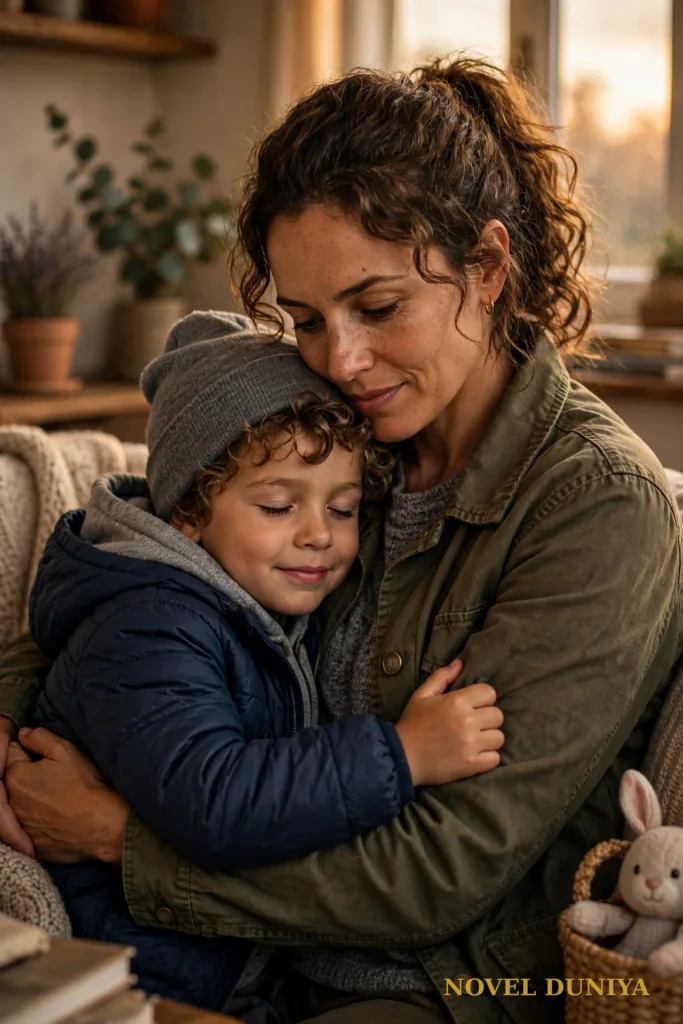
Single mother Urdu novels are romances where the heroine is raising her children on her own — divorced, widowed, or left alone — and discovers that motherhood never cancelled her right to be loved. Here the stakes are always doubled: the hero doesn’t just have to win her heart. He has to earn her child’s trust too.
Quick summary:
– The trope: a mother raising children alone finds a second chance at love
– Signature flavors: the divorced mother, the widowed mother, the unexpected guardian
– Core appeal: doubled devotion — she guards her child, he proves worthy of both
– Best anchor: Jaan Ban Jana (divorced mother of a young daughter)
– Honest note: a thin niche — mother-heroines mostly live inside divorce and second-marriage stories; this guide names only what’s verifiable
What Makes Single Mother Urdu Novels Different
A romance with a child in it runs on different fuel. In an ordinary love story, the heroine risks her heart. In such romances, she risks her heart and her child’s world — school fees, bedtime routines, the questions a small voice asks about an absent father. Every romantic gesture lands heavier, because it must pass through the filter of motherhood first.

The defining question of the genre is simple and brutal: can this man be trusted around my child? Desi society answers with suspicion from every side — her family warns her against remarrying, strangers judge her for wanting love at all, and the prospective groom’s own relatives ask pointed questions. The best of these stories take that pressure seriously. The hero doesn’t sweep her off her feet; he stands still long enough for a frightened child to decide he is safe.
That slowness is the genre’s gift. Where first-love novels rush, these stories deliberate — and when the ending arrives, it feels earned in a way few tropes can match.
The Three Shapes of the Single Mother Heroine
The divorced mother. The most common shape. Her marriage ended — through divorce, separation, or a husband who simply walked away — and she is rebuilding on one income and pure willpower. Her wound is trust: someone she married broke his promises, so a new man’s promises must survive far more scrutiny. Jaan Ban Jana is the anchor here — a divorced heroine raising a young daughter, taking a job, rebuilding her confidence one careful step at a time.
The widowed mother. Grief writes this version. She didn’t choose to be alone, and her love story has to pass through loyalty to a dead man — her child’s father. The hero who wins her must never ask her to forget; he wins by honoring what came before. This shape overlaps our widow heroine guide, which maps the widow-heroine more fully.
The unexpected guardian. The rarest shape — a woman raising a child who is not hers by birth. Subas Gul’s Mama belongs to this family (with an honest caveat below): Tara Usman raises a child she did not give birth to with total devotion. Where this shape appears in romance, the guardian-heroine’s love for the child becomes the proof of her capacity for an even greater love.

The Child: Fiction’s Hardest Lie Detector
If this niche has a secret weapon, it is the child. Children in these stories see through charming heroes instantly. A man can fool a heroine’s mother, her friends, even the heroine herself — but he cannot fool a six-year-old who watches how he listens. The child’s slow acceptance of the right man is one of the genre’s great pleasures: the scene where a wary kid finally takes his hand is the emotional climax of a hundred plots.
But the child is also a wound. In the audio novel Maan, the first husband rejects his wife and her unborn child — and a different man, no blood relation, chooses to raise that child as his own. That question — what makes a father, blood or devotion? — sits at the heart of the trope. The finest single mother Urdu novels never treat the child as decoration. The child is a second heartbeat the heroine carries into every scene, and any man who wants her must love the heartbeat too.
What the Hero Must Prove
Her hero faces a harder audition than any other leading man. Charm won’t do it — a charming man is exactly what hurt her before. Wealth won’t do it — she has learned to survive without it. What works is stranger and simpler: steadiness.
He proves himself in small scenes, not grand gestures. He remembers the child’s exam date. He waits outside the school gate without being asked. He never tries to replace the absent father — he offers to be an addition, not a substitution. And crucially, he accepts her boundaries: when she says “not in front of my child,” he hears love, not rejection. Readers can spot the real hero of these stories within chapters, because the test is never about passion. It is about whether a man can love a package deal — and mean it.
Divorced Mother vs Widowed Mother vs Guardian: A 3-Way Map
Readers often blur these, but they run on different engines:
- Divorced mother novels run on repair — the heroine’s broken trust must be rebuilt, and the hero’s patience is the proof. Cross-read our divorced heroine Urdu novels guide.
- Widowed mother novels run on permission — the heroine must grant herself the right to live and love again after grief. Cross-read widow heroine.
- Guardian mother stories run on choice — devotion without blood, which reframes what “mother” even means. (Usually family fiction rather than romance — shelved honestly below.)
Knowing which engine a story runs on tells you what kind of ending to expect, and what kind of hero the story needs.
Verified Titles in This Niche
Honesty first: Urdu writers almost never tag a novel “single mother,” so the documented shelf is small. What follows is only what the sources verify.

Jaan Ban Jana (the source page names no writer — withheld per our honesty rule) — The anchor title and the rare novel built squarely around a mother-heroine: a divorced woman raising a young daughter, timid after her broken marriage, who takes a job and slowly rebuilds her confidence — and her heart. The daughter is not scenery; she shapes every decision, including whom to trust.
“Single Mother” afsana by Sarah Omer (audio, narrated by Maryam Zahid) — A complete Urdu afsana about a single mother’s love, struggles, sacrifices, and quiet strength. Short fiction rather than a full novel, but the most directly on-theme title the sources offer, widely shared in audio form.
Maan (مان) (audio novel; the listing names no writer) — A second-marriage story where a husband rejects his wife and her unborn child, and a protector steps in to raise the child as his own. Included as the clearest illustration of the genre’s central question: who is the real father — the man of blood, or the man of devotion?
Mama by Subas Gul — A mother-centered novel about Tara Usman, who raises a child she did not give birth to with complete devotion. Honest shelf note: this is parenting fiction, not romance — included because readers searching for mother-centered stories deserve to find it, correctly labeled.
The crossover shelf — Because mother-heroines in Urdu fiction overwhelmingly appear inside divorce and remarriage plots, the richest hunting ground is our divorced heroine Urdu novels and second marriage Urdu novels guides — mother-heroines appear in nearly every other entry.
Why These Stories Matter
Every novel on this shelf that treats remarriage with dignity does quiet cultural work. In real desi life, a divorced or widowed mother who considers marrying again is still judged — by family, by neighbors, sometimes by her own children. These stories push back gently: they argue that a child’s happiness and a mother’s right to love are not opposites, and that a man willing to love both is not settling but choosing the braver path.
That is why readers return to this shelf even though it is thin. It promises something first-love novels cannot: proof that life’s hardest chapters can still end in tenderness.
The Single Mother ↔ Orphan Heroine Mirror
There is a deliberate mirror at the heart of this guide. The single mother is the woman who raises a child alone; the orphan heroine is the girl raised by no one at all. One story is about giving devotion when you have almost nothing left; the other is about surviving on devotion you never received. Read them together — our orphan heroine Urdu novels guide is the sibling shelf — and each makes the other more moving.
How to Find Your Next Read
For the definitive single-mother romance, start with Jaan Ban Jana — the one title built entirely around a mother-heroine’s second chance.
For short, emotional fiction, try Sarah Omer’s “Single Mother” afsana in audio — one sitting, and it stays with you.
For the wider shelf where mother-heroines actually appear in Urdu fiction, move to our divorced heroine Urdu novels and second marriage Urdu novels guides — that is where mother-heroines are written with the most depth.
Frequently Asked Questions
Q: What are single mother Urdu novels?
A: Single mother Urdu novels are love stories whose heroine is raising her children alone — divorced, widowed, or otherwise on her own — and who finds romance while carrying the full weight of motherhood. The hero must win two hearts, not one.
Q: Which title should I start with?
A: Jaan Ban Jana is the most clearly documented — a novel built around a divorced heroine raising a young daughter and rebuilding her life. For short fiction, Sarah Omer’s “Single Mother” afsana (available in audio) is the most on-theme title.
Q: Are single mother novels the same as divorced heroine novels?
A: They overlap heavily — most single-mother heroines are divorced. The difference is focus: divorced-heroine novels center the woman’s past marriage and healing; these novels center her children and the higher stakes motherhood brings to any new romance.
Q: Is Mama by Subas Gul a single mother romance?
A: No — and the distinction matters. Mama is a beautiful parenting story about a woman raising a child she did not give birth to. It is family fiction, not a romance, and belongs on the family shelf, correctly labeled.
Q: Why are there so few such romance novels in Urdu?
A: Because the publishing ecosystem files these stories under “second marriage” or “divorce” — the plot engines — while “single mother” describes the heroine’s situation. The stories exist; they are shelved under neighboring labels, which this guide maps for you.
Q: Are these novels suitable for young readers?
A: They deal with mature themes — divorce, widowhood, single parenthood — and suit adult readers best. The tone is typically dignified and family-centered rather than explicit.
Q: Where can I find more novels with mother heroines?
A: Browse our divorced heroine Urdu novels and second marriage Urdu novels guides — mother-heroines appear across both shelves with the greatest depth.