
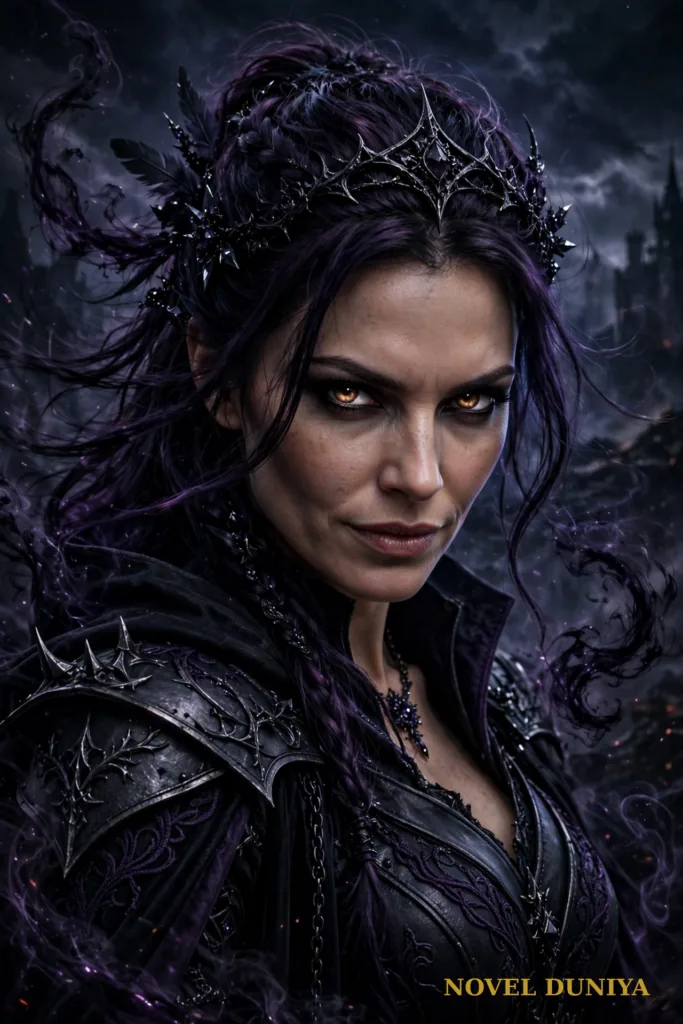
Evil Heroine Urdu Novels – Dark Heroine
Evil heroine Urdu novels are love stories built on a single reversal: the woman everyone fears is the woman you root for. She is cold, ruthless, called “evil” by everyone around her — until the story peels back her mask and shows the wounds underneath. The honest truth first: almost nobody writes her. This guide explains why the shelf is so thin, clears the search confusion, and lists only verified titles — without inventing a single one.
Quick summary:
– The trope: a feared, ruthless heroine whose “evil” is really armor built from trauma, betrayal, and revenge
– Reality check: an extremely thin niche — The Evil Lady by Mahi Shah is the only verified, dedicated dark-heroine novel
– Key confusion: most “evil heroine” search results actually show evil heroes (“devil heroes”), not heroines
– Related but different: rude heroines are sharp-tongued and proud — difficult, not dangerous
– Core fantasy: watching a woman who was destroyed rebuild herself into someone nobody dares to hurt again
What Defines Evil Heroine Urdu Novels
An evil heroine novel turns the genre’s usual fear map upside down. In most Urdu romances, the man is the dangerous one and the heroine softens him. Here, the fear belongs to her side of the love story. She is the one people whisper about, the one mothers warn their sons about, the woman whose name makes a room go quiet.
She may be ruthless, calculating, or openly vengeful — but the best of these stories never leave her as a simple villain. Her darkness is always a scar: a past full of pain, betrayal, and injustice that taught her softness was a luxury she could not afford. And her core conflict is the mirror image of the classic romance: instead of the heroine taming the cruel hero, it is the heroine who must be seen through. The male lead becomes the first person to look past her terrifying reputation and find the broken girl underneath — and the romance begins only when she lets him.
Every dark-heroine story asks one question at its heart: is she truly evil, or is evil just the shape her survival took?
Why This Shelf Is So Thin
It helps to be honest about why evil heroine Urdu novels are so hard to find. Urdu romance traditionally places the heroine at the moral and emotional center of the story. She is the one readers identify with, the one whose goodness anchors the novel. A genuinely dark heroine breaks that convention — she asks the reader to love someone everyone in the story fears.
That is a difficult sell, and most writers never attempt it. The result is a niche so small it barely qualifies as a shelf: one verified dedicated novel, a handful of boundary titles, and an ocean of search results that belong to a different trope entirely. The thinness is not your imagination. It is the genre’s own rule about who the heroine is allowed to be.

Verified Dark-Heroine Titles
Honesty first: this is a small list, and it stays small on purpose. No padding, no invented titles.
The Evil Lady by Mahi Shah — the anchor of the entire niche, confirmed across multiple independent novel platforms. A mysterious, feared woman known only as “The Evil Lady” lives in an isolated, eerie house that people believe is cursed. She is powerful, cold, and ruthless — but she became that way because of betrayal, abuse, and the loss of everything she loved. Her life shifts when she meets a strong, intelligent man who begins to unravel the truth behind her “evil” persona. Their relationship burns with tension, danger, and emotional conflict, and he becomes the first person to see the real woman behind the mask. The story moves through horror, mystery, and psychological suspense, but its emotional core is dark romance — a tale of power and control, revenge versus forgiveness, trauma and healing, and how love can slowly bring light back to a darkened soul.
Villain by Noor ul Huda — a multi-character dark romance built on revenge and second chances. It is not a single dark-heroine story, but it belongs on this shelf because it asks the dark-heroine question from several angles at once: what turns a person toward their evil side, and what does it cost them? The story follows Jalal, who set out to take revenge on an innocent girl named Basma but ended up becoming her protector; Tabish, whose personality was twisted by repeated torture; and Arfa, a girl who chose her evil side simply to survive her life. The line between victim and villain blurs on every page.
Ak Villain by Kiran Chaudhary — a boundary marker, not a true member of this shelf. It is a gangster-hero based novel, which means its “villain” is the male lead. It appears here only because its title surfaces in villain-related searches and readers often land on it while hunting for dark female leads. Knowing where the boundary lies is part of honest guidance.
The Three Shapes of the Evil Heroine
Because the niche is so small, it helps to see the few shapes this trope takes.
The revenge-forged woman. The dominant — nearly the only — shape. She was betrayed, abused, or destroyed by people she trusted, and instead of surrendering to the pain, she embraced her darkness. Now she lives for revenge, punishing those who broke her. The Evil Lady is the textbook example: a woman called evil because she is powerful, cold, and ruthless, when the reality is that she became that way after a cruel past filled with pain and injustice. Behind her terrifying reputation lies a girl who once loved and trusted — and suffered greatly for it.
The villain-ensemble lead. Some stories spread the “evil” across several characters rather than crowning one heroine. Villain shows how darkness can live in everyone at once — Jalal’s revenge curdling into protection, Tabish’s torture-twisted mind, Arfa’s chosen survival. These are stories about how villains are made, not born.
The feared outsider. She lives apart — in a house people say is cursed, in a neighborhood that crosses the street to avoid her. The rumors do the heavy lifting: people call her evil because she is alone, powerful, and refuses to explain herself. This shape runs on reputation versus reality, and the romance ignites when one brave — or curious — man decides to find out who she really is.
Evil Heroine vs Rude Heroine vs Grey Heroine
Search results constantly mix these up, so here is the map:
Evil heroine = feared, dark, vengeful. People call her evil. Her darkness grew out of trauma, and she is genuinely dangerous. (The Evil Lady)
Rude heroine = sharp-tongued, proud, quick to anger — but fundamentally decent. She argues; she does not destroy. Several Urdu novel platforms tag novels with “rude heroine” the way they tag rude heroes, as a character trait. She is difficult to handle, not dangerous to know.
Grey heroine = morally ambiguous. She might lie, manipulate, or make cruel choices, but she is neither monster nor saint. Most “dark” heroines in Urdu fiction actually live in this middle zone.
If you came here looking for rude heroines, our rude heroine shelf has far more options — and our strong heroine guide covers heroines who are powerful without being dark.
Evil Hero vs Evil Heroine: The Big Confusion
Most “dark heroine” search results are actually about evil heroes — the so-called “devil heroes” of Urdu romance. Take the popular audio novel Ishq Akhri Hei Tu: its “Devil” is Farhad Beg, a cold, ruthless SP — the hero, feared by criminals, who forces a young girl into marriage. That is devil-hero fiction, not dark-heroine fiction.
The gender flip matters enormously. Devil-hero novels are about a woman taming a dangerous man. Dark-heroine novels are about a man seeing through a dangerous woman. Same darkness, opposite direction. If devil heroes are your thing, our bold romantic novels shelf is where they live.
The “Devil Heroine” Wording Trap
A quick warning about search phrasing: many readers type “devil heroine” hoping for a dark female lead, and the search engines hand them devil heroes — cruel, possessive male leads — because that is the shelf that actually exists at scale. The phrase “devil heroine” has no real shelf of its own in Urdu fiction. If you want her darkness, search for “evil heroine” or “dark heroine” specifically — and keep the distinction in this article’s earlier sections handy when the results try to redirect you.
Evil ↔ Kind: The Moral Poles Mirror
Here is a thought worth sitting with: the evil heroine and the kind heroine are the same woman at opposite ends of her story. One hardened; one stayed soft. One decided the world would fear her; one decided she would love the world anyway.
Both arcs begin in the same place — a woman who has been hurt. The evil heroine answers pain with armor; the kind heroine answers it with grace. Readers who love one often end up fascinated by the other, because both ask the same question from opposite directions: what does pain make of a woman? If you came for the darkness, our kind heroine guide offers its mirror — the lightest shelf in Urdu romance, and a surprisingly good companion read.
Who Will Love This Trope
This trope is for readers who are tired of fragile heroines and want someone formidable. If you love revenge stories, moral complexity, and romances that start in the darkest place and earn their way toward light, the evil heroine shelf — thin as it is — will feel like it was built for you.
It is also for readers drawn to transformation arcs: the satisfaction of watching a woman who was victimized refuse to stay a victim, rebuilding herself on her own terms into someone the world fears instead of pities. And there is a quiet forgiveness fantasy running underneath it all — the story always asks whether someone who has done dark things deserves love, and answers, slowly, that healing is possible even for the broken.
Reading Guidance: Know What You’re Picking Up
A gentle note before you dive in: genuine dark-heroine novels deal with heavy themes — betrayal, abuse, trauma, and revenge. The Evil Lady in particular moves through horror and psychological suspense. These are not light reads.
Start with The Evil Lady if you want the full, committed version of the trope. Read Villain if you prefer your darkness spread across several characters with more suspense than horror. If dark themes weigh on you, pace yourself — and remember that fiction is a place to explore feelings, not a place to sit with them alone. Talking to someone you trust always helps more than any novel can.
Frequently Asked Questions
Q: Which is the most famous dark-heroine Urdu novel?
A: The most famous and widely discussed is The Evil Lady by Mahi Shah — a dark, horror-romantic story about a feared woman called “evil” who was shaped by trauma and betrayal, and the man who sees through her mask. It is essentially the only dedicated dark-heroine novel with wide verification.
Q: Is The Evil Lady by Mahi Shah a horror novel or a romance?
A: Both. It combines horror, mystery, and psychological suspense with a dark romance at its emotional core — the relationship between the feared heroine and the man who unravels her past.
Q: What is the difference between an evil heroine and a rude heroine?
A: A dark heroine is feared — her ruthlessness grows from trauma, and people genuinely call her evil. A rude heroine is simply sharp-tongued and proud; she is difficult to handle, not dangerous. They are different shelves with different fantasies.
Q: Are there any dark-heroine novels besides The Evil Lady?
A: Very few are verifiable. Villain by Noor ul Huda explores villainy from multiple characters’ angles, including a girl who chose her evil side. Beyond that, most “dark heroine” search results are actually about devil or evil heroes, not heroines.
Q: Why do “devil heroine” searches show male heroes?
A: Because the phrase “devil heroine” has no real shelf in Urdu fiction — search engines redirect you to the massive “devil hero” shelf of cruel, possessive male leads. Use “evil heroine” or “dark heroine” as your search phrases instead.
Q: Why are dark-heroine novels so rare in Urdu fiction?
A: Urdu romance traditionally centers the heroine as the moral and emotional heart of the story, so a genuinely dark heroine breaks the genre’s deepest convention. That rarity is exactly what makes the trope fascinating when someone does attempt it.
Q: Is the dark-heroine trope suitable for all readers?
A: These novels deal with heavy themes like betrayal, abuse, and revenge, plus horror and suspense elements. They suit readers who enjoy dark, intense fiction — lighter-romance readers may prefer the strong or kind heroine shelves instead.

