


Urdu Novels – Best Urdu Novels List, Top Writers & Genres
Urdu Novels – Best Urdu Novels List, Top Writers & Genres

What Are Urdu Novels?
Urdu novels are long-form fiction written in the Urdu language, and they are one of the most loved forms of storytelling in Pakistan. For decades, readers discovered new novels through monthly digests — Khawateen Digest, Shuaa Digest, and others — where novelists published their stories in episodes before they were collected into books. That digest culture shaped everything about the modern Urdu novel: the emotional intensity, the cliffhangers, the unforgettable characters.
Today, most readers find Urdu novels online. Classic literary novels share space with a huge wave of contemporary romantic fiction written by a new generation of women novelists. Whether you love slow-burn romance, spiritual journeys, or intense family dramas, there is an Urdu novel for you — and this page is your starting point.
A Brief History of Urdu Novels
The Urdu novel is older than most readers realize. The story begins in 1869 with Mirat-ul-Uroos by Deputy Nazir Ahmad — widely regarded as the first Urdu novel. Written as a moral tale contrasting two sisters, it set the template for fiction with a purpose: to entertain while teaching.
Soon after came the great serialized adventures. Ratan Nath Sarshar’s Fasana-e-Azad, published in episodes through the 1880s, followed the comic escapades of Azad and Khoji across cities and battlefields — one of the earliest long Urdu narratives, and proof that readers loved a continuing story long before television existed.
The early twentieth century brought realism. Writers began holding a mirror to society — its poverty, its customs, its injustices — and the novel became a serious literary form. After Partition, the canvas grew even wider: Qurratulain Hyder’s Aag Ka Darya (1959) swept across centuries of history in a single narrative, showing what the Urdu novel could achieve at its most ambitious.
Then came the digest era — the golden age most of today’s readers grew up with. From the 1970s onward, monthly magazines like Khawateen Digest and Shuaa Digest published novels in episodes, and millions of readers waited for the next installment the way modern audiences wait for the next episode of a drama serial. Digest novelists wrote with extraordinary discipline, and names from this era became household words across Pakistan.
The modern era belongs to a new generation. Umera Ahmed redefined the spiritual and romantic novel for contemporary readers, while Bano Qudsia‘s Raja Gidh became a philosophical landmark. Television adaptations — most famously the Humsafar drama — carried Urdu stories to audiences who had never picked up a novel, and many of those viewers became readers.
Today we are in the digital era. Urdu novels are discovered, discussed, and devoured online — in reading groups, on social media, and on dedicated reading sites. The digest may have moved to the screen, but the appetite it created has never been larger.

Popular Genres of Urdu Novels
Romantic Urdu Novels
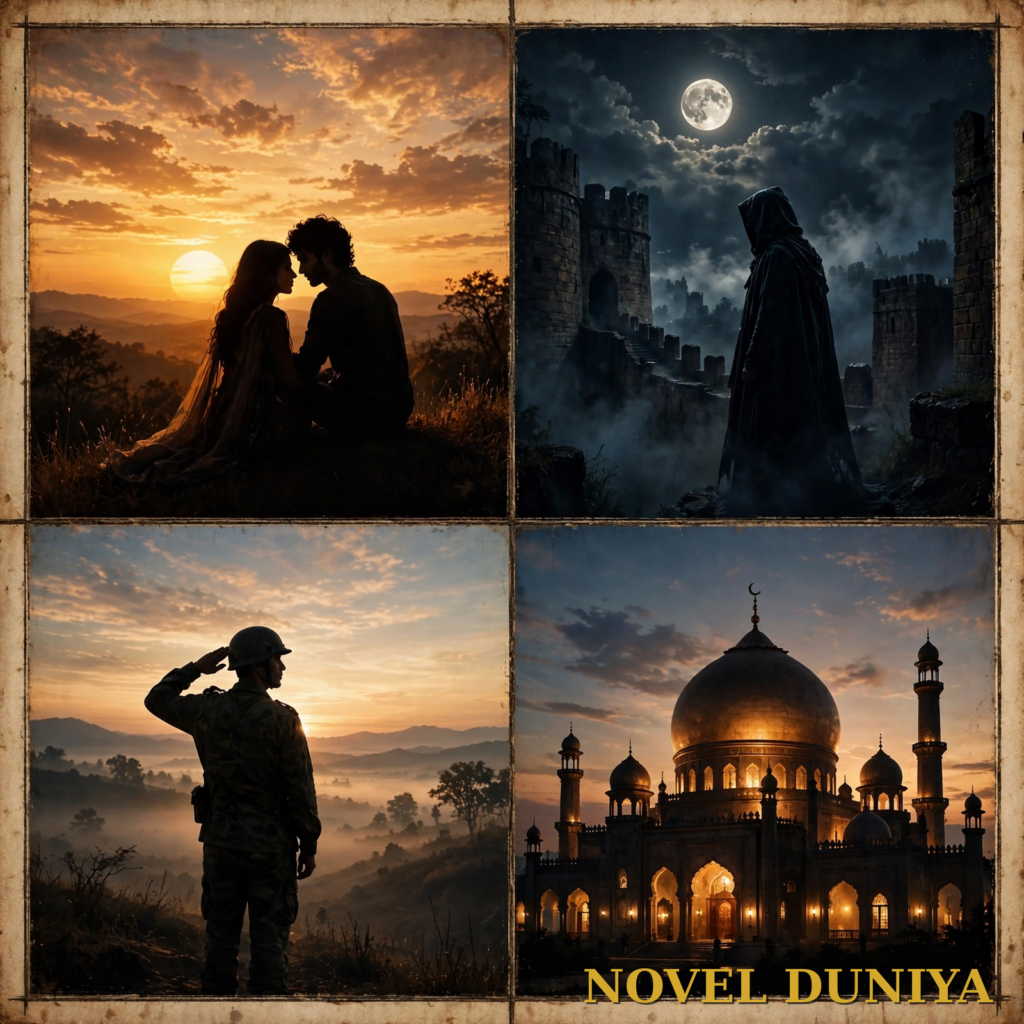
Romance is the heart of the Urdu novel world. These stories revolve around love — sometimes soft and poetic, sometimes stormy — set against family expectations, social pressure, and fate. If you are new to Urdu novels, start here: Humsafar by Farhat Ishtiaq and Amar Bail by Umera Ahmed are beloved entry points.
Bold Romantic Novels
A popular modern category with more intense emotions and passionate storytelling. Readers who enjoy high-drama romance gravitate here. Bakht by Mehrunnisa Shahmeer is one of the most talked-about titles in this space.
Forced Marriage Novels
One of the most searched Urdu novel categories: stories where circumstances force two people into marriage, and love grows (or clashes) afterward. The tension between resentment and affection drives these plots.
Cousin Marriage Novels
A staple of desi storytelling — childhood bonds, family dynamics, and love that was always close to home. These novels resonate deeply with Pakistani readers because the settings feel familiar.
Rude Hero Novels
The arrogant, cold hero who softens only for the heroine is an evergreen trope. Readers love the transformation arc — pride melting into devotion.
Revenge-Based Novels
Love mixed with vengeance: betrayals, family feuds, and justice served through intense emotional confrontations. Ankaboot by Noor Rajpoot brings a darker, suspenseful edge to the genre.
Army-Based Novels
Stories of soldiers, duty, and love tested by service. Patriotic themes blend with romance, and these novels have a devoted following.
Islamic Urdu Novels
Faith-centered fiction where characters find or rediscover Islam through life’s trials. Mushaf by Nimra Ahmed — a story woven around love for the Quran — and Raja Gidh by Bano Qudsia, a philosophical classic about halal and haram, define this genre.
Urdu Novels Genres in Depth: Four Worlds Worth Exploring
The genre list above tells you what exists. This section tells you why each world pulls readers in — so you can find yours.
Romantic Urdu Novels: Love in All Its Shades
Romance dominates Urdu fiction for a simple reason: it never repeats itself. One novel gives you a quiet, poetic love tested by family duty; the next gives you a stormy passion that defies everything. What unites them is emotional honesty — Urdu romantic novels take feelings seriously, and readers reward that seriousness with fierce loyalty.
If you want the purest form of the genre, Humsafar by Farhat Ishtiaq remains the gold standard: a marriage of convenience, misunderstandings, pride, and a reconciliation that readers never forget. For something more idealistic, Amar Bail by Umera Ahmed weaves love through bureaucracy and national duty — proof that romance in Urdu novels is rarely just romance.
Forced Marriage Urdu Novels: Where Resentment Turns to Love
Few tropes grip readers like this one. Two people bound by family decision or circumstance, sharing a home but not a heart — and then, slowly, the walls crack. The forced-marriage novel works because it manufactures the hardest question in romance: can love be built, or must it only be found?
Readers search for this category more than almost any other, because the emotional payoff is enormous. Every cold glance that softens, every reluctant act of care, lands harder when the marriage itself was unwanted. It is also a deeply desi fantasy — the arranged marriage, reimagined as a love story.
Islamic Urdu Novels: Faith as the Protagonist
In these novels, the real journey is inward. Characters lose their way — through arrogance, grief, or worldly success — and find it again through faith. The genre’s power comes from recognition: almost every reader has felt spiritually adrift at some point.
Mushaf by Nimra Ahmed anchors the genre for modern readers, tracing a young woman’s return to the Quran. Raja Gidh by Bano Qudsia goes deeper still, asking uncomfortable questions about desire, morality, and what separates the lawful from the forbidden. These are not preachy books — they are novels where faith is dramatic, contested, and alive.
Rude Hero Urdu Novels: The Arrogant Heart
The cold, proud hero who bows to no one — except her. This trope has survived decades because the transformation arc never gets old: watching pride melt into devotion, arrogance into protectiveness, is one of fiction’s great pleasures.
What makes the rude hero work in Urdu novels specifically is the cultural setting. Family honor, social hierarchy, and emotional restraint give the hero’s coldness somewhere to come from — and give his softening real stakes. When he finally breaks, it means something.
Most Famous Urdu Novels
If you want the essential reading list, these are the novels every Urdu reader knows:
- Peer-e-Kamil by Umera Ahmed — the spiritual journey of two lost souls finding faith; arguably the most famous Urdu novel of the modern era.
- Aab-e-Hayat by Umera Ahmed — the sequel to Peer-e-Kamil, continuing the story years later.
- Haalim by Nimra Ahmed — a genre-bending mix of time travel, politics, and adventure.
- Namal by Nimra Ahmed — a gripping murder-mystery and family saga.
- Jannat Kay Pattay by Nimra Ahmed — a thrilling journey of faith, courage, and self-discovery.
- Raja Gidh by Bano Qudsia — a literary classic exploring morality and desire.
- Mushaf by Nimra Ahmed — faith and emotion intertwined around the Quran.
- Humsafar by Farhat Ishtiaq — the beloved romance that became a television phenomenon.
- Amar Bail by Umera Ahmed — bureaucracy, idealism, and an unforgettable love story.
- Bakht by Mehrunnisa Shahmeer — intense bold romance with a massive online following.
- Ankaboot by Noor Rajpoot — dark suspense romance from a rising star.
Urdu Novels for Beginners: Where to Start
Never read an Urdu novel before? The library can feel overwhelming — hundreds of famous titles, passionate fanbases, inside jokes you don’t get yet. Here is the honest shortcut: pick ONE gateway novel based on your taste, and let it pull you in.
If you love love stories, start with Humsafar. Humsafar by Farhat Ishtiaq is the most welcoming door into Urdu fiction — a clean, emotional romance with characters you will think about for weeks. It is also short enough to finish without commitment anxiety.
If you want depth and meaning, start with Peer-e-Kamil. Peer-e-Kamil by Umera Ahmed is the novel people describe as life-changing. It asks big questions about faith, purpose, and redemption — and it respects your intelligence while asking them. Read its sequel, Aab-e-Hayat, only after: the sequel assumes you know these characters.
If you want thrill and pace, start with Namal. Namal by Nimra Ahmed reads like a premium crime drama — murder, family secrets, courtroom tension — and it will convert even skeptical readers. If you finish it hungry for more, Jannat Kay Pattay by the same writer keeps the adrenaline going with an adventure built around faith and courage.
Three practical tips for beginners. First, don’t start with a sequel or a second part — always check whether the novel continues a story. Second, don’t judge the whole tradition by one book; a reader who dislikes one romance subgenre often loves another. Third, use the writer pages: once a novel clicks for you, that writer’s other books are your safest next picks, because voice and sensibility carry across their work.


Top Urdu Novel Writers
Behind every great novel is a writer readers trust. These are the names that define Urdu fiction today:
- Umera Ahmed — the most influential living Urdu novelist; Peer-e-Kamil, Aab-e-Hayat, Amar Bail, and the drama serials that defined an era.
- Nimra Ahmed — queen of the modern socio-romantic thriller; Haalim, Namal, Jannat Kay Pattay, Mushaf.
- Areej Shah — hugely popular contemporary romantic novelist with a devoted online readership.
- Wahiba Fatima — rising voice in romantic Urdu fiction.
- Noor Rajpoot — known for intense, suspenseful storytelling including Ankaboot.
- Farwa Khalid — contemporary novelist building a loyal following.
Each writer’s page on Novel Duniya collects their novels in one place, so you can explore a whole bibliography without searching scattered sites.
How to Read Urdu Novels on Novel Duniya
Reading on Novel Duniya is simple. Every novel has its own dedicated page — like Peer-e-Kamil or Haalim — with an honest introduction, story overview, and writer background. Where a verified reading copy is available, the novel page carries a Read Online button that opens the book right on the site, so you never lose your place.
You can browse by writer through the writers’ directory, or start from the genres above and follow the links to novels that match your mood. New novel pages are added regularly.
How to Choose Your Next Urdu Novel
Finished a novel and don’t know what to read next? Match your mood — it works better than any ranking list:
- In the mood to cry (in a good way): pick Mushaf or Amar Bail — both earn their tears honestly.
- Want suspense that won’t let you sleep: Namal or Ankaboot — mysteries with real stakes.
- Craving big ideas: Raja Gidh or Peer-e-Kamil — novels that argue with you, respectfully.
- Need pure romantic comfort: Humsafar — the literary equivalent of a warm blanket.
- Want adventure with meaning: Haalim or Jannat Kay Pattay — journeys, literal and spiritual.
- Curious about the bold side: Bakht — intense, unapologetic, hugely popular.
Another reliable method: follow the writer, not the title. If Umera Ahmed‘s voice moved you, her other novels will too — writers have signatures, and readers develop loyalties for good reason. The same holds for Nimra Ahmed, Areej Shah, and every name in the writers section above.
Why Urdu Novels Still Matter in the Streaming Era
Television has never been stronger in Pakistan — and paradoxically, that is good news for Urdu novels. Some of the biggest dramas of recent years began life as novels. When viewers fell in love with the Humsafar drama, huge numbers went looking for Farhat Ishtiaq’s original novel — and discovered that the book gives you something the screen cannot: the characters’ inner lives.
That is the enduring advantage of the Urdu novel. A drama shows you what people do; a novel tells you what they feel while doing it. The long internal reflections, the moral dilemmas, the slow accumulation of small moments — these are things prose does better than any camera. Readers who want the full emotional weight of a story still reach for the book, even after watching the adaptation.
There is also the question of completeness. Adaptations condense, merge characters, and sometimes reshape endings to suit television pacing. The novel is the author’s uncut version — every subplot, every quiet scene, exactly as intended. For devoted readers, that matters enormously.
And then there is community. Urdu novel readers discuss, debate, recommend, and re-read together — in family drawing rooms, in online groups, in comment sections. A novel is never just a story; it is a shared experience that outlasts its last page.
Finally, the digital era has lowered the gate. Where the digest era required impressing an editor, today’s writers can build an audience directly — and readers get more voices, more experiments, more stories that traditional publishing might never have risked. The tradition that began with Mirat-ul-Uroos in 1869 is not fading into nostalgia; it is being rewritten right now, by thousands of new hands.
Frequently Asked Questions
Which is the most famous Urdu novel?
Peer-e-Kamil by Umera Ahmed is widely considered the most famous modern Urdu novel, loved for its spiritual depth and unforgettable characters. Among classics, Raja Gidh by Bano Qudsia holds a legendary place.
Where can I read Urdu novels online?
You can read Urdu novels on Novel Duniya — each novel page includes story details, writer background, and a Read Online button wherever a verified reading copy is available.
Who is the best Urdu novel writer?
Umera Ahmed and Nimra Ahmed are the two most popular contemporary Urdu novelists, with massive readerships in Pakistan and beyond. For classical literature, readers revere Bano Qudsia, Ashfaq Ahmed, and Intizar Hussain.
What are the main types of Urdu novels?
The most popular genres are romantic, bold romantic, forced marriage, cousin marriage, rude hero, revenge-based, army-based, and Islamic novels. Each has its own devoted readership.
Are Urdu novels available in English?
A few famous ones, like Peer-e-Kamil, have English translations. But the vast majority of Urdu novels — especially contemporary romantic fiction — exist only in Urdu, which is part of their charm for native readers.
How do I choose my first Urdu novel?
Start with your mood: for spiritual depth, try Peer-e-Kamil; for thrill and adventure, Haalim or Namal; for classic romance, Humsafar; for faith-centered fiction, Mushaf. Then explore the writer’s other books from there.
What is considered the first Urdu novel?
Mirat-ul-Uroos, published in 1869 by Deputy Nazir Ahmad, is widely regarded as the first Urdu novel. Written as a moral tale about two sisters, it established fiction as a serious form in Urdu literature and opened the door for everything that followed.
What is the difference between digest novels and regular novels?
Digest novels were originally published in monthly magazines like Khawateen Digest and Shuaa Digest, released in episodes — which is why many have cliffhangers, sprawling casts, and intense emotional arcs. “Regular” novels were written directly as books. Today the line has blurred, since most digest novels are also available as complete books, but the episodic DNA still shapes their storytelling style.
Can I read Urdu novels for free online?
Many Urdu novels are available to read online, and on Novel Duniya each novel page carries a Read Online button wherever a verified reading copy exists. Be cautious of random sites promising free downloads — they often host incomplete, misattributed, or low-quality copies. Sticking to established reading pages protects both your experience and the writers’ work.
I have never read an Urdu novel — where should I begin?
Start with one gateway novel matched to your taste: Humsafar for romance, Peer-e-Kamil for spiritual depth, or Namal for thriller pacing. The “Urdu Novels for Beginners” section above walks through all three paths in detail — pick yours and dive in.

