
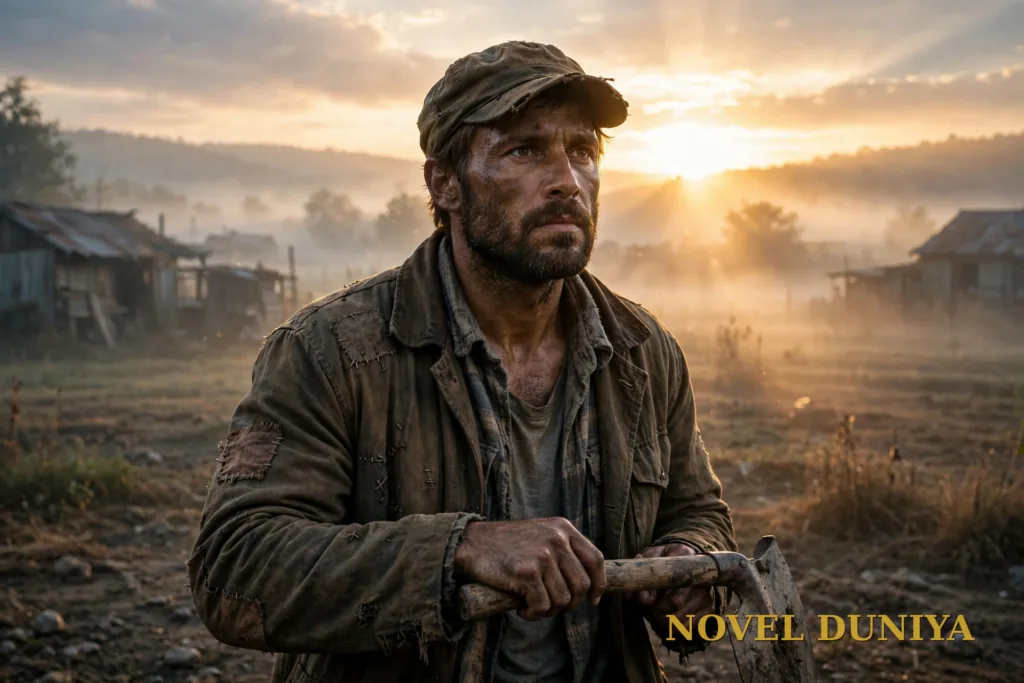
Poor Hero Urdu Novels – Love Without Money
Poor hero Urdu novels are love stories where the hero has little or no money — the gareeb larka who must win the heroine with character instead of wealth, pride instead of power. This is Urdu fiction’s rarest hero shape: the genre’s dominant fantasy is the rich, commanding hero. This guide explains why the niche is nearly empty, clears up the “rude hero = poor hero” confusion that fills the search results, and gives you the verified titles worth your time — without inventing a single one.
Quick summary:
– The trope: the hero lacks money — his conflict is worth, not wealth; the mirror of the rich-hero fantasy
– Reality check: a nearly empty shelf; most “poor hero” search results are rude-hero lists, not poor-hero stories
– Verified anchor: Siyah Raaton Ke Chaand (rude poor hero + rich innocent heroine, emergency nikah, age difference — audio)
– Key distinction: a rude hero is usually rich — rude does not mean poor
– Core fantasy: being chosen for character when he has nothing material to offer
What Defines Poor Hero Urdu Novels
A poor hero novel is defined by one reversal: the poverty is on his side of the love story. He may be the laborer, the struggling student, the employee in her father’s office, the man whose pride is his only property. The heroine — often wealthier, better connected, or simply more secure — is the one with something to lose.
His core conflict is always the same question, asked in a hundred different ways: am I loved, or am I tolerated? When the heroine’s world holds the money and the influence, every romantic moment carries a shadow. Is her affection genuine or pity? Is the marriage love or charity? The best poor-hero novels live inside that tension — and resolve it only when the heroine proves, beyond doubt, that she chose him, not her own generosity.
Notice the engine. The classic rich-hero fantasy says: “he is worthy because he can protect and provide.” The poor-hero fantasy says the opposite: “he is worthy because of who he is.” It is the dignity fantasy, and it is powerful precisely because it is rare.
Rude Hero ≠ Poor Hero
This is the single biggest confusion in the search results, so let us clear it up first.
Search “poor hero urdu novels” and Google hands you rude-hero and cruel-hero lists — urdunovelsmag’s rude-hero archive, urdunovelsghar’s cruel-hero list, parhlo’s rude-hero tag pages. These shelves are full of powerful, wealthy, commanding men: billionaires, CEOs, feudal lords, men whose rudeness is backed by money. That is not a poor hero. That is the rich hero wearing a bad mood.
The confusion is understandable — “rude” and “poor” both describe a hero who struggles — but they describe opposite struggles. The rude hero’s struggle is temper: he has everything except softness. The poor hero’s struggle is means: he has softness, loyalty, and pride, but no money. One must learn gentleness; the other must earn worth. If you came here looking for a gareeb hero and landed on a billionaire with anger issues, the search engine misled you — this page is the correction.

Why the Gareeb Hero Is So Rare
Here is the honest answer, and nobody on the search results gives it: Urdu romance sells the provider fantasy. The hero who can protect, provide, rescue, and command is the genre’s default — the billionaire, the CEO, the army officer, the feudal heir. A hero without money removes the genre’s favorite engine, and most writers, writing for readers who dream of being protected, do not go there.
There is a second, quieter reason: the dignity problem. A poor heroine can be written as graceful in poverty — the genre has a whole language for it (the “dignity girl” of our poor heroine guide). A poor hero is harder to write without wounding the traditional ideal of masculinity the readership holds. Writers who attempt it usually give him compensating power — he is rude, or dangerous, or secretly noble — because a simply poor, simply gentle hero is, to this market, a hard sell.
So the shelf is nearly empty. That is not a search failure. That is the genre telling you the truth about itself.
Verified Poor Hero Titles
We list only what we can verify. The list is short — that is the point.
- Siyah Raaton Ke Chaand. The anchor title for this entire niche: a rude poor hero and a rich innocent heroine, joined by an emergency nikah across an age difference. The rare story where the poverty genuinely sits with the hero — and it doubles as the anchor of our rich heroine guide. (Audio; writer credit not published in the source.) Name warning: not to be confused with Siyah Raat by Mirha Kanwal, a horror-romantic novel — a completely different story.
- The “Gareeb Hero” audio keyword. YouTube’s Urdu audio ecosystem repeatedly tags stories with “gareeb hero” (poor hero) — including an audio upload explicitly keyworded “Gareeb Hero possessive Hero.” We mention this as search evidence that readers want this trope, not as a verified title, because no novel name or writer is attached.
Beyond this, the honest position is: no written, verifiable poor-hero novels surfaced in our research. The niche lives in audio fragments and reader keyword searches.
The Four Shapes of the Poor Hero
From the fragments that do exist, four shapes emerge:
The proud laborer. Dignity without money. He works with his hands, refuses charity, and the heroine must love him without ever making him feel small. The purest form of the trope — and the rarest in print.
The rude poor hero. Temper without wealth. His pride is his armor because he has nothing else. (Siyah Raaton Ke Chaand follows this shape: rude, poor, and joined to a rich heroine by emergency nikah.)
The emergency husband. Nikah first, earning later. Circumstance — an emergency, a family crisis, a sudden marriage — puts him in the heroine’s world before he has earned his place in it, and the story is his climb.
The devoted underdog. He wins through loyalty, patience, and quiet sacrifice rather than power. The softest shape — and the one the market resists most.
The Mirror Shelf: What Dominates Instead
To understand the poor hero, look at what Urdu fiction writes instead. The same audio ecosystem that barely whispers “gareeb hero” shouts the rich-hero fantasy from every corner:
- Gharoor Ka Takrao — Sikandar Shirazi, the rich hero, and Zimal, the village girl he underestimates. Rich hero, poor heroine: the dominant engine.
- Zindan e Junoon — Saim Shah, who marries his driver’s innocent daughter to secure an heir. Rich hero, poor heroine, forced marriage.
- Mohabbat Ke Do Jahan — the rude billionaire hero and the poor innocent girl. Rich hero, poor heroine, love at first sight.
- Ishq-e-Azaar — the rich boss Kabir Shah and his poor employee Areeba. Rich hero, poor heroine, office romance.
- Be Pannah Ishq — the rich hero and the middle-class heroine, through marriage, divorce, and second chances.
Every one of these is the mirror image of what you searched for. If you recognize the engine you actually enjoy, our poor heroine, billionaire, CEO romance, and rude hero guides hold the full shelves.
Poor Hero vs Rich Heroine: The Crossover
These two niches are siblings, and they share their only anchor. In Siyah Raaton Ke Chaand, the poor hero and the rich heroine meet in a single story — his poverty and her wealth colliding through an emergency nikah.
The distinction matters for searching:
– Poor hero novels (this page): the story is about his lack of money — the dignity fantasy from his side.
– Rich heroine novels (our full guide): the story is about her possession of money — the same collision from her side.
One story, two search terms, two angles. Browse both — the shelves are small enough to finish in an evening.
How to Choose Your Next Read
If you want the genuine article — the one verified story where the hero is truly poor — find the audio of Siyah Raaton Ke Chaand (and double-check the title against Mirha Kanwal’s Siyah Raat before you press play).
If you want the dominant fantasy instead — be honest with yourself: the rich-hero engine is where Urdu romance actually lives. Our rude hero, billionaire, and poor heroine guides have the titles.
If you want the mirror-mirror — the rich heroine who must love the poor hero — see our rich heroine guide. The two niches are two sides of one coin.
A note on the audio ecosystem: poor-hero stories, where they exist, live almost entirely in YouTube audio uploads with no published writer credits. We list them as audio finds, never with invented authorship — if a source does not name the writer, neither do we.
The Class Climb and the Village Setting
The poor hero’s truest arc is the class climb: not a sudden fortune but a slow climb to respect. The gareeb larka wins the heroine with character first, and the world’s respect second — if it comes at all. That ordering matters. Stories that hand him wealth without the climb are a different fantasy; the class-climb story insists that dignity precedes money, and sometimes replaces it entirely.
The village-poverty setting gives that climb its hardest stage. In a village, poverty is communal and visible: everyone knows whose roof leaks and whose family eats last. A poor hero there cannot hide his standing behind city anonymity, so every small rise — a job, a skill, a kept promise — is witnessed by the whole community. The climb is public, which makes both its setbacks and its triumphs cut deeper.
Frequently Asked Questions
What are poor hero Urdu novels?
Love stories where the hero has little or no money — the gareeb larka who must win the heroine with character instead of wealth, and whose pride is often all he owns.
Why are poor heroes so rare in Urdu fiction?
The genre’s dominant engine is the rich hero, so the poor hero survives mostly as a single character inside other shelves rather than as a large labelled category of his own.
What is the difference between a poor hero and a rude hero?
A rude hero wounds with temper; a poor hero struggles with circumstance. Poverty is his situation, not his personality — and confusing the two is the shelf’s most common misfiling.
What is the class-climb arc?
The hero’s slow climb from disrespect to respect through work, integrity, and kept promises — dignity first, wealth second, and sometimes dignity instead of wealth.
Where should a new reader start?
With the verified titles listed on this page, and then the mirror shelf: our rich heroine guide asks the same class question with the money on the other side.

