
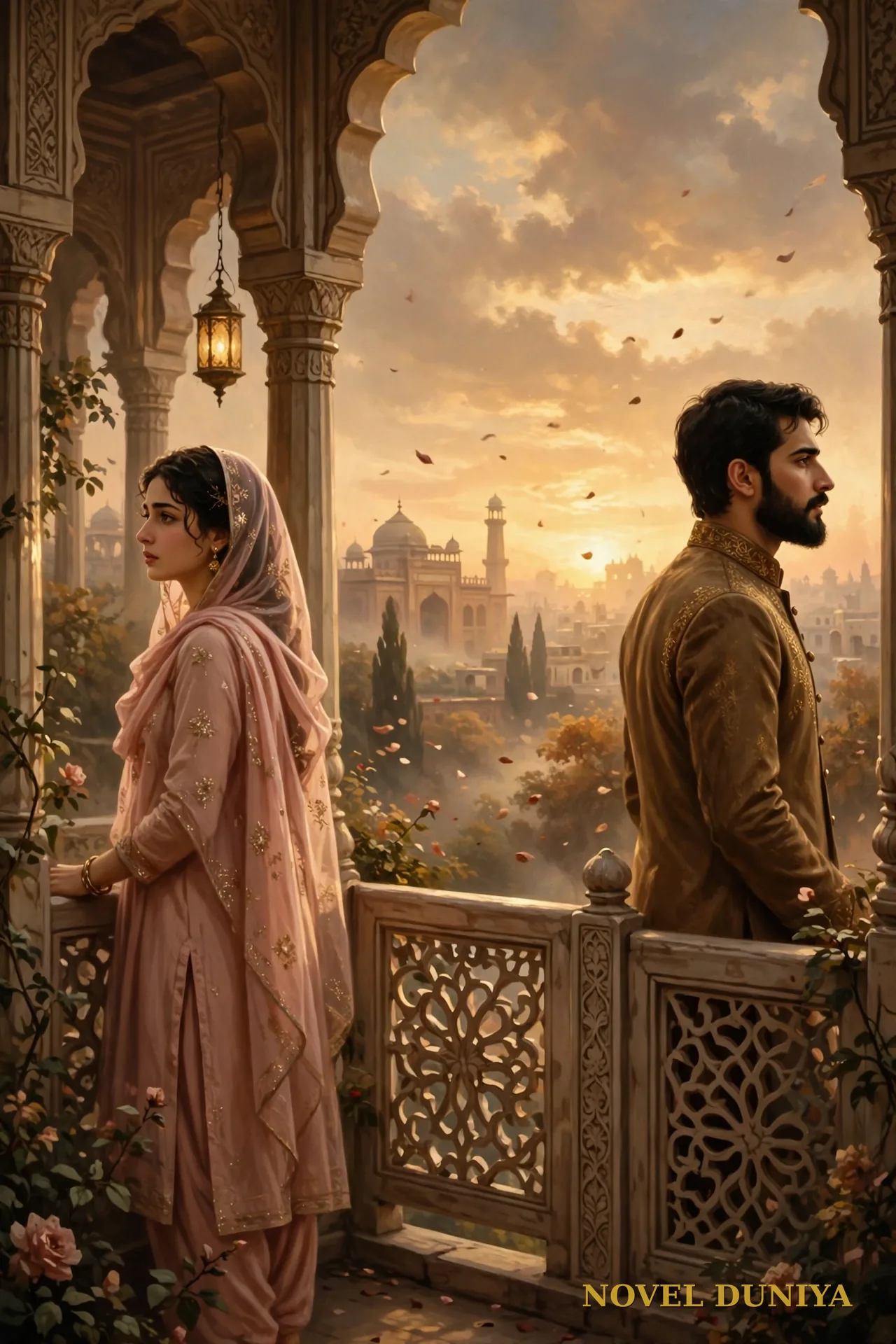
Humsafar Novel by Farhat Ishtiaq – Read Online
Humsafar Novel by Farhat Ishtiaq – Read Online
Humsafar by Farhat Ishtiaq is the most famous Urdu romantic novel of the modern era — the story of Khirad Ehsan and Ashar Hussain, two cousins pushed into marriage by a dying father’s wish, torn apart by family schemes, and reunited years later by their daughter Hareem.
If you have watched the blockbuster Hum TV drama, this guide fills in the novel behind it. If you haven’t read either yet, this is where the story of Khirad and Ashar begins.
Quick summary:
– Novel: Humsafar (ہم سفر)
– Writer: Farhat Ishtiaq
– Genre: Romantic, social, family drama — after-marriage love, class difference, misunderstandings
– First published: Serialized in Khawateen Digest (2007–2008); complete novel by Ilm-o-Irfan Publishers (2008)
– Famous for: The Hum TV drama adaptation (2011–2012) starring Fawad Khan and Mahira Khan
Novel Information
| Novel Name | Humsafar |
| Writer Name | Farhat Ishtiaq |
| Genre | Romantic, Social, Family Drama |
| Language | Urdu |
| Status | Complete |
Plot Overview
The novel opens with a woman arriving at a man’s office with a stack of legal documents and a shocking demand. Khirad Ehsan has come to Ashar Hussain — the man who was once her husband — because their daughter Hareem needs life-saving heart surgery, and she cannot afford it alone.

From there, the story unfolds backwards. Ashar, a successful businessman from a wealthy family, looks back at how he ended up married to Khirad, a simple schoolmaster’s daughter from a modest home in Hyderabad. His father, Baseerat Hussain, lay on his deathbed weighed down by guilt: he had never helped his late sister, Khirad’s mother. His last wish was that Ashar marry Khirad, to make amends.
Ashar agreed out of duty, and the marriage began awkwardly — two strangers from different worlds. But slowly, stubbornly, love grew between them. For a time, they were genuinely happy. Then came the misunderstandings. Ashar’s mother, Farida, had opposed the marriage from the start and looked down on Khirad’s background. Through a web of planted doubts and manufactured evidence, Khirad was made to look unfaithful, and Ashar — proud and hot-tempered — believed the worst.
Khirad left. For four and a half years she raised Hareem alone in poverty, keeping the secret of her daughter’s parentage. Only when Hareem’s congenital heart condition made treatment urgent did Khirad return to Ashar’s door — and the truth began to surface. The second half of the novel belongs to Khirad’s voice: what really happened, what she endured, and how two people who once loved each other find their way back for the sake of their child.

Main Characters
Khirad Ehsan — The heroine: dignified, intelligent, and quietly strong. Raised by her single mother after her father’s death, she carries herself with a self-respect that poverty never dented. Her defining trait is patience — she endures suspicion and hardship without losing her grace.
Ashar Hussain — The hero: educated, wealthy, and initially reluctant. He marries Khirad only to honor his father’s wish, falls in love with her deeply, then destroys the marriage with his own mistrust. His journey is one of pride humbled and love painfully relearned.
Farida Hussain — Ashar’s mother and the novel’s antagonist: proud, status-conscious, and fiercely opposed to Khirad. Her schemes set the tragedy in motion.
Baseerat Hussain — Ashar’s kind-hearted father, whose deathbed wish starts the story. A man trying to repay an old family debt too late.
Hareem — Khirad and Ashar’s young daughter, whose illness brings her parents back together. In many ways, she is the bridge the title speaks of.
Themes That Carry the Story
Love after marriage. Humsafar is one of Urdu fiction’s defining “after-marriage love” stories — two people who did not choose each other, learning to love anyway. It asks whether love needs a beginning, or whether it can grow from duty and respect.

Class and pride. The gulf between Khirad’s modest background and Ashar’s elite world never fully closes. The novel shows how class prejudice poisons even genuine affection.
Misunderstanding as tragedy. The central catastrophe is not villainy alone but mistrust — Ashar’s willingness to believe the worst about the woman he loved. Humsafar is, at its core, a warning about what suspicion does to love.
Motherhood and sacrifice. Khirad’s years of silent struggle, raising Hareem alone, give the novel its emotional weight. Her endurance is the story’s quiet heroism.
The Novel vs. the Drama
Many readers came to Humsafar through the Hum TV serial (aired September 2011 to February 2012, produced by Momina Duraid, directed by Sarmad Sultan Khoosat). The drama made Fawad Khan and Mahira Khan household names across South Asia.
One thing the novel does differently: it is told retrospectively, mostly in flashbacks — the first half largely from Ashar’s point of view, the second half mainly from Khirad’s. This structure means the novel reads less like a love story and more like two people remembering the same marriage very differently. Readers who only know the drama will find the novel’s dual-perspective storytelling adds real depth.
About the Writer: Farhat Ishtiaq
Farhat Ishtiaq is one of Pakistan’s most celebrated Urdu novelists and screenwriters, known for stories that blend romance with sharp social observation. Before Humsafar made her famous, she wrote for women’s digests; after it, she became one of the defining drama writers of her generation with works like Diyar-e-Dil and Udaari.
Humsafar was her breakthrough — the novel that proved a digest romance could become a cultural phenomenon.
Read more about Farhat Ishtiaq’s life and literary works on Wikipedia.
Read Online
Looking for the Humsafar novel to read? Novel Duniya helps you find legitimate ways to read Urdu novels. Humsafar is available as a published book through Ilm-o-Irfan Publishers — we recommend supporting the writer by buying the official edition, and we never post fake download buttons or invented file sizes.
What to Read Next
If Humsafar stayed with you, try these:
- Mata-e-Jaan Hai Tu — another Farhat Ishtiaq classic of love tested by distance and family
- Meri Har Kami Ko Tu Lazmi — after-marriage love with a possessive hero
- Forced Marriage Novels — more stories where duty turns into love
Frequently Asked Questions
Who wrote the Humsafar novel?
Farhat Ishtiaq. It was serialized in Khawateen Digest from July 2007 to January 2008 and published as a complete novel in 2008.
What is the story of Humsafar?
Cousins Khirad and Ashar marry to honor a dying father’s wish, fall in love, then separate over misunderstandings planted by Ashar’s mother. Years later, their daughter’s illness brings them back together.
Is Humsafar based on a true story?
No — it is fiction. Like many great digest novels, it draws on recognizable social realities (class divides, family pressure), but the story itself is invented.
Is the Humsafar drama the same as the novel?
Broadly yes, but the novel is told in flashbacks with the story split between Ashar’s and Khirad’s perspectives, which gives it a different, more reflective feel than the drama.
Who are the main characters of Humsafar?
Khirad Ehsan, Ashar Hussain, his mother Farida Hussain, his father Baseerat Hussain, and their daughter Hareem.
Is Humsafar a complete novel?
Yes. It was published as a complete novel by Ilm-o-Irfan Publishers in 2008.
What does “Humsafar” mean?
Humsafar (ہم سفر) means “fellow traveler” or “life companion” — someone who walks the journey of life with you.